12 Best Timeless Living Room Ideas That Last

Updated: 7 days ago

A living room can look impressive on handover day and still feel dated within a few years. The difference is rarely one expensive sofa or a dramatic feature wall. The best timeless living room ideas begin with a room that works beautifully for daily life, then layer in materials, furniture, and details with lasting visual confidence.
For homeowners planning an HDB, condominium, or landed-home renovation, timeless design is not about making every choice neutral or safe. It is about creating a dependable foundation that can adapt as your family, routines, and tastes evolve. A well-planned living room should accommodate quiet evenings, visiting relatives, children's activities, and the practical needs of storage, lighting, and circulation without feeling overdesigned.
What makes a living room timeless?
Timeless interiors rely on proportion, restraint, and quality rather than a single trend. They feel considered because the major elements - the layout, flooring, built-ins, and upholstery - have a clear relationship to the scale of the room.
This approach does not require a traditional aesthetic. A contemporary living room can be timeless when its lines are clean, its palette is measured, and its finishes are selected for how they will wear over time. Conversely, a room filled with short-lived visual statements may need another renovation long before the materials themselves have reached the end of their useful life.
The goal is to make permanent decisions carefully and keep the easier-to-change layers more expressive. Flooring, carpentry, electrical planning, and the main seating deserve the most attention. Cushions, art, occasional tables, and accessories are where personality can shift with less cost and disruption.
Best timeless living room ideas for a lasting home
1. Start with a layout that protects circulation
A beautiful layout fails when people must sidestep furniture to reach the balcony, dining area, or bedrooms. Before choosing finishes, establish clear paths through the space and position seating around how the household actually gathers. In compact apartments, this often means choosing a slimmer sofa profile or a floating furniture arrangement rather than pushing every piece against a wall.
Leave adequate room between the coffee table and sofa, and avoid placing a large sectional simply because it fills the plan. A smaller, well-proportioned sofa with an occasional chair may provide more flexibility and make the room appear larger. The right answer depends on whether the living room is primarily for entertaining, television viewing, or daily family use.
2. Build the room around a calm, flexible palette
Warm whites, soft greiges, mushroom tones, muted stone, and gentle wood hues have staying power because they work with changing furnishings and natural light. They also create a more restful backdrop in urban homes, where the visual field can feel busy beyond the windows.
A neutral palette should not be flat. Introduce depth through variations in texture and undertone: a warm off-white wall, taupe upholstery, walnut or oak timber, and a rug with subtle pattern can sit together without competing. If you love stronger color, use it on a painted accent, armchair, artwork, or drapery rather than committing it to every large surface.
3. Choose materials that improve with age
Some finishes announce themselves immediately but show wear quickly. Timeless rooms favor materials with natural variation and a forgiving character, such as timber veneer, stone, linen-blend fabrics, wool rugs, and matte metal details. These surfaces gain warmth from everyday use rather than looking tired at the first scratch or stain.
This does not mean every project needs natural stone or solid timber. Good-quality porcelain, durable laminate, and engineered surfaces can be excellent choices when budget, maintenance, or site conditions call for them. The key is selecting finishes that convincingly suit the design concept and can withstand the household's real habits.
4. Invest in seating with good proportions
The sofa is often the largest visual object in the room, so its silhouette matters more than decorative extras. Look for a design with balanced arms, comfortable seat depth, and durable upholstery in a versatile color. Extremely low, oversized, or heavily tufted sofas can be striking, but they may limit who can use them comfortably and tie the room to a particular period.
For many homes, a tailored sofa paired with one or two movable lounge chairs offers the best balance. Chairs can turn toward the television, face guests for conversation, or move aside when more floor space is needed. Select upholstery based on lifestyle: textured performance fabric is practical for families, while leather may suit homes seeking a more refined, lower-maintenance finish.
5. Use a rug to create visual order
A rug is not merely an accessory. It defines the conversation zone and brings separate furnishings into one composed arrangement. The common mistake is choosing a rug that is too small, leaving it isolated beneath the coffee table. Ideally, the front legs of the main seating should sit on the rug, or the rug should be large enough to frame the entire arrangement.
A subtle geometric, tonal, or lightly textured design is more versatile than a highly graphic print. Consider the room's maintenance needs as well. A pale, high-pile rug may look luxurious, but it can be impractical in a high-traffic home with pets, young children, or frequent entertaining.
6. Layer lighting instead of relying on one ceiling fixture
Even the most carefully designed living room can feel harsh under a single bright ceiling light. Plan lighting in layers: general illumination for everyday use, focused lighting near reading areas, and softer ambient lighting that gives the room depth at night.
Recessed lights can provide an unobtrusive base, while a floor lamp, table lamp, or wall sconce introduces warmth at eye level. Where possible, put different lighting zones on separate controls. This small technical decision gives homeowners far more control over the mood of the space than another decorative fixture ever could.
7. Design the TV wall for longevity, not spectacle
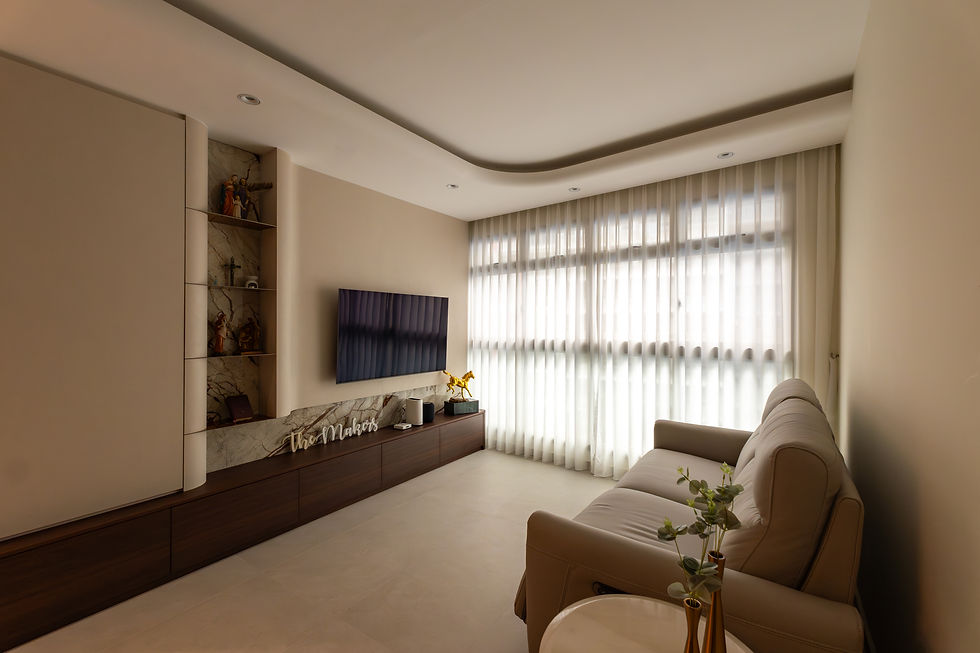
A television wall should support the room rather than dominate it. Overly ornate panels, excessive strip lighting, and too many contrasting finishes can make a living room feel fixed to a particular renovation trend. A simpler composition in timber, stone-look finish, paint, or textured plaster will usually age better.
Practical planning is equally important. Conceal cables, allow for ventilation, provide accessible power points, and consider future equipment changes. If storage is included, combine closed cabinets for visual calm with a limited number of open niches for objects that genuinely deserve display.
8. Add built-in storage with restraint
Storage is essential in many Singapore homes, but full-height cabinetry across every wall can make a living room feel heavy. The best solution often combines one purposeful storage zone with lighter elements elsewhere. For example, a low console may visually lengthen the room, while a discreet full-height cabinet near the entry can absorb less attractive daily items.
Keep the exterior detailing quiet. Handleless fronts, slim pulls, consistent panel widths, and a finish related to the room's other materials will help the carpentry feel integrated. Interior organization matters too: plan shelves, drawers, charging points, and compartments around what will actually be stored.
9. Frame windows with considered drapery
Curtains bring softness, privacy, and acoustic comfort, particularly in rooms with hard flooring and large glass areas. Hang them high and wide where site conditions allow, so the window appears more generous and daylight is not unnecessarily blocked.
A full-length fabric curtain in a natural-looking weave is a reliable choice for many interiors. Sheer layers can diffuse strong daylight, while blackout lining may be useful in rooms exposed to intense afternoon sun. Avoid choosing window treatments solely by swatch. Their fullness, track placement, and drop length affect the finished result as much as the fabric itself.
10. Bring in character through art and collected objects
A timeless room should still feel personal. Art, ceramics, books, and meaningful objects prevent a polished design from becoming generic, but they need room to breathe. One substantial artwork often has more impact than a crowded gallery of unrelated pieces.
Choose objects with a connection to the household: travel finds, inherited pieces, handmade ceramics, or books that are actually read. These layers can be edited and refreshed over time, giving the room a sense of life without forcing changes to the costly built elements.
Plan timeless decisions before construction begins
The most successful living rooms are resolved well before furniture arrives. During design development, the team should verify site measurements, map furniture dimensions, coordinate lighting and power points, confirm material junctions, and understand how each built-in will be used. This reduces costly adjustments during construction and helps the finished space reflect the original concept.
At The Makers Design Studio, this is where design vision meets disciplined execution. A clear sequence from space planning and schematic design through construction drawings, sourcing, and project management makes it easier to protect both the visual quality and practical function of the room.
Timelessness is not achieved by avoiding change. It comes from giving your home a strong, adaptable framework, then leaving space for the people and objects that will make it distinctly yours.


Comments