Timeless Office Interior Design That Lasts
Updated: Jun 26

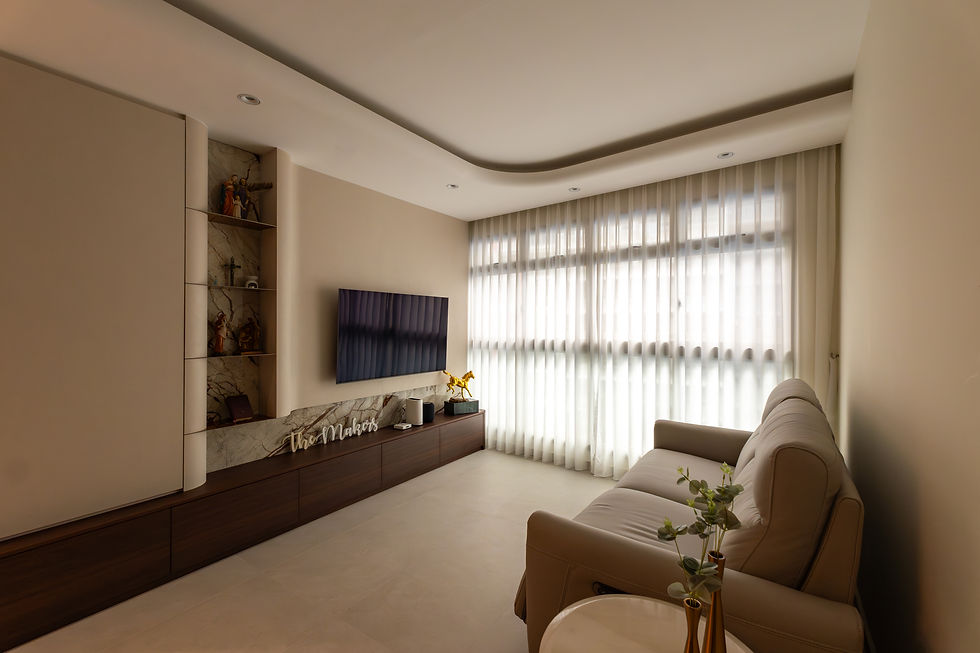
Picture by The Makers Design Studio
A well-designed office should still feel right five years from now, not just impressive on handover day. That is the real test of timeless office interior design - creating a workplace that supports daily operations, reflects the business clearly, and avoids the short shelf life of trend-led choices.
For business owners and decision-makers, this is not only a design question. It is a planning question, a budget question, and often a productivity question. An office that ages well reduces the need for frequent cosmetic updates, supports changing team needs, and gives clients and staff a stronger sense of confidence in the business behind it.
What timeless office interior design actually means
Timeless office interior design is often misunderstood as something plain or overly conservative. In practice, it is neither. A timeless workspace can still feel distinctive, contemporary, and branded. The difference is that its core design decisions are based on lasting principles rather than short-term visual trends.
Those principles usually include proportion, material quality, functional clarity, and a restrained use of statement features. Instead of building the entire office around a color of the year or a social media-inspired concept, the design starts with how the business works. That means looking closely at circulation, privacy, collaboration, storage, lighting, and the impression the space should create for both staff and visitors.
When these fundamentals are resolved properly, the office has a much longer design life. Smaller elements can evolve over time, but the foundation remains relevant.
Why businesses benefit from a timeless approach
A workplace renovation is a serious investment. Most companies do not want to repeat the process simply because the design starts to look dated after two or three years. A timeless approach protects that investment by focusing on choices with endurance.
There is also a practical advantage. Offices that are planned around real operational needs tend to perform better. Teams move more efficiently, meeting areas function as intended, and workstations support concentration instead of visual clutter. The result is not just a more polished office, but a more usable one.
For client-facing businesses, timeless design also communicates stability. An office does not need to be flashy to feel premium. In many cases, restrained and well-executed interiors project more credibility than spaces filled with attention-seeking details.
The foundation of a timeless office interior design scheme
A timeless office begins with planning, not decoration. Before finishes and styling are discussed, the spatial framework needs to be right.
Start with workflow and zoning
Every business has a different rhythm. Some offices need quiet zones for focused work. Others rely on fast collaboration, private consultation rooms, or flexible meeting spaces. A timeless design responds to these patterns instead of forcing the team into a layout that looks good on paper but creates friction in daily use.
This is where good space planning makes a measurable difference. Clear zoning between public and private areas, circulation that feels intuitive, and work areas sized for actual use all contribute to a layout that remains effective as the business grows.
In Singapore, this matters even more because commercial footprints are often compact. Making every square foot work harder is not a design luxury. It is a business requirement.
Use materials that age with dignity
Some finishes look exciting at first and tired very quickly. Others develop character over time. Timeless offices typically rely on materials that have visual depth, durability, and a neutral enough base to support future updates.
Natural wood tones, textured laminates, quality stone-look surfaces, glass, metal accents, and well-chosen upholstery all have a place, depending on the brand and budget. The key is balance. If every surface competes for attention, the office can feel dated fast. If the palette is too sterile, it may feel impersonal.
This is one of the areas where trade-offs matter. Premium materials usually perform better over time, but budget allocation must be strategic. It often makes sense to invest more heavily in high-contact areas such as reception counters, meeting rooms, flooring, and built-in joinery, while selecting more cost-efficient finishes in secondary zones.
Keep the palette controlled, not cold
Color plays a major role in longevity. A timeless office does not have to be beige, but it usually benefits from a disciplined palette. Neutral foundations tend to last longer because they allow furniture, art, signage, and branding elements to evolve without forcing a full redesign.
That said, neutrality should not be mistaken for lack of identity. Brand colors can still be introduced, but often in ways that are easy to refresh later, such as feature walls, loose furniture, acoustic panels, soft furnishings, or graphics.
A controlled palette also helps the space feel more cohesive. This is especially useful in offices with multiple zones, where too many contrasting colors can create visual noise and make the layout feel fragmented.
Furniture choices that support longevity
Furniture has a major impact on how timeless an office feels. The wrong pieces can date a space faster than the architecture itself.
The best approach is usually to select clean-lined, well-proportioned furniture with comfort and durability in mind. Ergonomics matter here. A beautiful office that is uncomfortable to work in will never be truly successful.
Modularity is another important consideration. Businesses change, headcounts shift, and departments evolve. Furniture systems that can be reconfigured without replacing everything offer better long-term value. This is especially relevant for growing companies or teams working in hybrid patterns.
Statement pieces still have a role, but they should be chosen carefully. One distinctive lounge chair in a reception area can add personality. Filling the office with highly stylized furniture can make the entire space feel tied to a specific moment.
Lighting is where timeless offices often succeed or fail
Lighting is one of the most overlooked parts of office design, yet it has a direct effect on comfort, mood, and the overall perception of quality.
Timeless offices usually layer lighting instead of relying on one harsh overhead solution. General lighting supports visibility, task lighting improves functionality at desks and meeting areas, and accent lighting helps define reception points or architectural features.
Natural light should be maximized wherever possible. It improves the experience of the workspace and makes materials look more honest and refined. Where daylight is limited, the goal should be to create even, comfortable illumination with color temperatures that feel professional rather than clinical.
Decorative lighting can add character, but it should be used with restraint. Oversized trend-driven fixtures may attract attention now, but they can quickly become the first element that feels out of place.
Branding without making the office feel temporary
A strong office should reflect the business, but branding does not need to dominate every surface. Timeless office interior design handles brand presence with more control.
This might mean incorporating brand identity through signage, material choices, graphics, or subtle color accents rather than large thematic gestures. The goal is to make the space feel aligned with the company, not overdesigned around marketing language.
This is particularly important for businesses that expect to evolve. A heavily branded office may need expensive revisions if positioning changes. A more refined approach gives the brand room to grow while keeping the interior relevant.
Why execution matters as much as design
Even the strongest concept can lose its impact if the build quality is inconsistent. Timelessness depends not only on selecting the right finishes and layout, but on how precisely those decisions are delivered.
That includes detailed drawings, proper coordination between trades, realistic budgeting, and disciplined project management. Poorly aligned joinery, uneven finishes, or rushed construction can make a new office look tired far sooner than it should.
This is why many clients prefer a single partner who can manage design, planning, renovation, sourcing, and handover as one coordinated process. It reduces the gaps between design intent and final delivery. For a business owner, that means fewer surprises and a more reliable outcome.
At The Makers Design Studio, this is exactly where a timeless concept becomes a practical result - through careful planning, buildable design decisions, and execution that supports the long view.
When timeless does not mean static
A timeless office should not feel rigid. Good commercial interiors allow for change. Teams expand, technology shifts, and work culture evolves. The most successful spaces are designed with enough flexibility to absorb those changes without losing their identity.
That may mean movable furniture, adaptable meeting rooms, more universal storage solutions, or infrastructure planned for future upgrades. A timeless office is not frozen in time. It simply has a strong enough foundation to keep adapting without needing to be reinvented.
If there is one principle worth holding onto, it is this: the best office interiors are not the ones that chase attention. They are the ones that continue to support the business, represent it well, and feel considered long after the trends around them have moved on.


Comments